
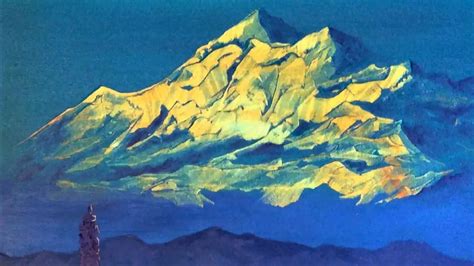
The Monk
(strangers on a train)
by Christian Lanciai (november 2026)
suggested by the novel by Robert Smythe Hichens.
The scene:
Two people in a railway compartment. They sit opposite each other, clearly strangers. He is nervous and seems to be troubled, while she pretends to read a book but is studying him intently. They both remain silent for an eternity as the train rolls on.
Dominique (after a long pause) You look as if you were brooding on a dark secret.
Alfred How did you arrive at such a guess?
Dominique I am good at reading people’s faces.
Alfred (dressed simply—suit and tie, but no white shirt) How do you do it?
Dominique A lifetime of experience. You are running away from something.
Alfred How could you guess that?
Dominique I can see it in you. Why else would you be on a train heading toward nowhere—a train that hardly anyone else would take?
Alfred You are on the same train.
Dominique Yes. I, too, am running away. That is why I believe we have something in common.
Alfred What are you running away from?
Dominique Myself. What else is there that one would have reason to flee from?
Alfred You are an enigma.
Dominique So are you.
Alfred You see right through me, intuitively and instantly. But what is it that you are fleeing from?
Dominique I have been on the run my entire life—mostly from myself.
Alfred Why?
Dominique And what is it that you are running away from?
Alfred The less said about that, the better. Where are you heading?
Dominique Away from the world and from people.
Alfred Then we truly do have something in common.
Dominique What is that?
Alfred We want to be detached from ourselves.
Dominique Can we do that?
Alfred That is the question.
Dominique You are well-dressed, yet dressed with modesty—as if you were venturing out into the wider world for the very first time. Do you have a background?
Alfred And you are dressed with the utmost propriety—as if you were determined, at any cost, to maintain your respectability.
Dominique Where are you heading?
Alfred Away.
Dominique Like me.
Alfred From what?
Dominique From myself?
Alfred But you are cultured and educated; you speak with great clarity—perhaps you were a teacher? Am I wrong?
Dominique You are not entirely wrong. My reverend mother Ludmila sent me away from my convent so that I might gain some perspective on my former life—as a kindergarten teacher—and find myself through meditation, free from the clamor of other people.
Alfred So, you have left a convent?
Dominique Yes.
Alfred How remarkable.
Dominique And why is that so remarkable?
Alfred Are you, by any chance, on your way to the Trappist monastery of Saint Joseph, at the foot of the Atlas Mountains?
Dominique No. I intend to stay in the village below.
Alfred And live there? And meditate?
Dominique To begin with.
Alfred And then?
Dominique Well, there is the entire desert to explore. The desert, after all, is known as the dwelling place of God.
Alfred So, you believe in God?
Dominique I am no apostate. I have merely stepped back, for a time, from all His worldly manifestations.
Alfred That is precisely what I have done.
Dominique Everyone should do the same. It is the only way to reach Him.
Alfred So, you believe it is possible to reach Him?
Dominique No. I don’t believe one can reach him. But I do believe that, within oneself, one can get as close to him as possible.
Alfred So you believe he is an actual entity?
Dominique He must be. Otherwise, the world and humanity could never have existed.
Alfred Then you have a faith. I do not.
Dominique Why not?
Alfred That’s a long story.
Dominique So is mine.
Alfred So, you left your convent on the advice of your abbess. How did you end up there?
Dominique That, too, is a long story.
Alfred I’m sure it’s an interesting one.
Dominique I sought out the convent to escape my former life. I have always sought to move away from my former life.
Alfred And what was your former life?
Dominique I was a prostitute in Paris.
Alfred Seriously? A real prostitute? One who walked the streets? Looking at you, one could never have guessed it.
Dominique Yes, I was a so-called fallen woman. I was part of that stage. All of Paris revolved around me. I knew every place where one could quickly find clients; I was an efficient man-eater and earned a good living, but eventually, I grew utterly sick of it all. That frenetic, extravagant nightlife simply became tedious, and I just wanted to escape it entirely. I went to a priest, confessed, and asked for guidance; he pointed me toward a better, simpler life—free from stress, free from alcohol and drugs, and free from all sorts of excesses. Eventually, I found my way into a religious order, taking monastic vows and embracing a life of chastity and solitude, while still being able to contribute as an educator and teacher for young children. I truly enjoyed it. I loved all those innocent little ones, who possessed such a fresh, genuinely clear perspective on life. Children are the most clear-headed of all human beings—until they reach puberty, at which point they become ruined and corrupted by sexual urges, never to be truly normal again. This constant disappointment—watching children grow up only to become corrupted—drained the life out of me. Finally, I’d had enough; I just wanted to get away from all the horrors of the world and the perpetual decay of humanity. I turned to Mother Ludmila, who understood me perfectly—she had endured that same purgatory herself, yet had managed to survive it, learning to bear the burden and make the best of a hopeless situation. She advised me to take an indefinite leave and seek out a Trappist monastery, as far away as possible. I want to explore this possibility. Perhaps it might offer me something. Do you have a similar story?
Alfred You could certainly say that. I have been to that monastery myself. I was a Trappist monk. I took all the vows required of a Trappist—silence, obedience, and labour—and became a holy brother among a small circle of others; at first, I felt it was the right path for me. But the world laid claim to me. It demanded that I devote myself to all of humanity, rather than just the spiritual stillness of meditation and devotion, so I felt I had to venture out into the world. And here I am now.
Dominique So you broke all your monastic vows—yet you aren’t heading out into the world. You are heading back to the monastery.
Alfred I know.
Dominique And how did you lose your faith?
Alfred My dear lady, I don’t even know your name…
Dominique Call me Dominique—but let us remain anonymous.
Alfred I am Alfred; the rest of my name shall remain unknown. I am an Englishman from a noble family—a fact I wish only to forget and suppress, much like you with your own past.
Dominique The less said about that, the better. But back to my question how did you lose your faith—if, indeed, you ever had any?
Alfred My dear Dominique, I was always one to ponder deeply. I spent much of my time reflecting on the world’s metaphysical dilemmas and questions; I studied philosophy and history, seeking to resolve universal religious problems—to the point that I became a theologian. But the monastery was not enough. In the end, I simply had to break free—and here I am.
Dominique So, are you still a believer?
Alfred Am I? That is the question. Honestly, that is a question of doubt. Dominique What is the reason for your doubts?
Alfred I have tried everything. For a while, I even considered the Foreign Legion for straightening me out.
might set me on the right path.
Dominique So, you were a legionnaire?
Alfred Yes—alongside all the scoundrels from all over the world. But there you didn’t have to think about yourself. You were your own legion, much like a blood cell is part of the human body. And since everyone else in the legion was the same, a kinship and brotherhood formed—a bond that could never be torn apart.
Dominique Why, then, are you no longer a legionnaire?
Alfred I needed solitude. In the Legion, you were never alone. Your comrades were always around you; you could never escape your brothers. You shared everything and were one with them—but I needed something for myself.
Dominique But does the Foreign Legion allow one to break away?
Alfred If they find me, I would be executed by a firing squad. If there is one thing forbidden in the Legion, it is desertion. I planned it for a long time, and I didn’t let anyone in on my plans. It’s like suicide—it can only succeed if no one else gets wind of it. And I succeeded. During a guard duty, I managed to slip away unnoticed, voluntarily casting myself into the harrowing hardships of the desert—until some Bedouins took me in and saved my life. I already knew Arabic, so the rest was simple.
Dominique And in the end, you sought refuge in a Trappist monastery.
Alfred I thought I would find there what I had always been searching for: solitude in peace and quiet—a chance to be alone with my own thoughts. But the isolation proved too great a trial.
Dominique I can understand you, as I was in a similar situation myself. We have both broken free from a rigid, disciplined life—as if that weren’t enough. But back to my question how did you lose your faith?
Alfred You insist, so sooner or later I must lay myself bare. But I warn you what you are compelling me to confront—and to share—is something that could turn large parts of the world upside down.
Dominique That only makes the issue all the more pressing.
Alfred I am well-versed in all classical and historical literature. I even tried to become a writer myself.
Dominique Did it not work out?
Alfred No publisher would accept my works. They wouldn’t touch me even with a pair of tongs, and they never even gave a reason—they just blamed the “soap opera” culture. Perhaps I was too ambitious; I refused to produce anything that wasn’t truly good. I held myself to high standards. I didn’t care about money or becoming a bestseller—I simply wanted my work to reach the world, because I knew what I was creating was significant. Beauty and drama were my guiding ideals—but the pearls were merely rejected by the swine. Writings are no longer sacred; modern technology mass-produces them, drowning the world in trash that proves more profitable than sophisticated endeavors or profound, serious work—which is simply dismissed as unsellable. All my works have been preserved, but I no longer care about them. I enjoyed the act of creation, but once finished, I simply left them behind and moved on. That is what I have always done.
Dominique So, you have been a writer, a member of the Foreign Legion, and a Trappist monk. What a wealth of experience you must have gathered.
Alfred The worst part is yet to come.
Dominique And what is it?
Alfred My secret.
Dominique Do you dare entrust it to a stranger?
Alfred That is the question. But you are no stranger. You are a sister.
Dominique Does that mean you can share it?
Alfred Provided you can keep the obligation of silence.
Dominique I still possess enough sanctity to be mindful of that duty.
Alfred God is a private matter for each individual. Everyone has their own personal relationship with God—if they have one at all. I have pondered on this my entire life, and my conclusions are undeniable, definitive, and irrevocable.
Dominique Get to the point.
Alfred Yes—we have been going around in circles for far too long, avoiding the subject. I have studied theology all my life. My conclusion is as follows:
It was the Hebrews who introduced the concept of an absolute God—a living, zealous God, omnipotent as the creator of heaven and earth. Yet, this is a human invention. There are burning bushes all over the desert, but Moses imagined that he had received a calling through one of them. He belonged to the Hebrews and was keenly aware of how they suffered under the overwhelming power of the Egyptians. Leading them out of Egypt was an ideal, cherished dream, and he had a vision of how it might be accomplished. Pharaoh was an autocrat and a deity with absolute power—he was a god. Having grown up in the royal household as a foster brother to Pharaoh, Moses was well acquainted with this self-proclaimed pharaonic divinity. Moses’ stroke of genius was to separate the divine from the mortal Pharaoh, transforming it into a spiritual being accessible only through the intimate communion of prayer. That became his signature approach. Just as Pharaoh maintained a constant, intimate connection with the divine, Moses would do the same—and, armed with the authority derived from that intimacy, he would lead Israel out of Egypt. He was aided by various natural plagues—all of which can be explained, save for the last one. But the Bible is full of exaggerations, intended to underscore this divine authority.
Dominique So, are you suggesting that Moses was bluffing?
Alfred He was firmly convinced that the spiritual realm transcended all human authority. He took an enormous risk, but he played the game through to the end. Through the books of Moses, God was established as the supreme authority—yet, ultimately, He remains nothing more than a human invention, one that is fundamentally beyond reach. Through his absolute, abstract spirituality, he is beyond refutation.
Dominique So, you mean he is a lie that can never be exposed?
Alfred More or less.
Dominique Then I understand your trepidation regarding this realization. It would mean the collapse of the entire world order—an order built upon monotheism as its sole viable foundation.
Alfred It would mean that Judaism collapses, revealed as something of a fraud from the very start; Christianity, being rooted in Judaism, would fall along with it; and Islam would emerge as the final, definitive, universal deception. Note that both Judaism and Islam preach violence against even the slightest hint of deviation from the absolute power of this abstraction—a profound self-contradiction, given that perhaps the most important of the Ten Commandments is “Thou shalt not kill.” This pacifist core principle ought to have become the primary pillar of civilization, rather than the concept of absolute, abstract power.
Dominique Yet, as an alternative to this, there stands the message of love preached by Jesus.
Alfred That is true, and it serves as a sound foundation for an entire civilization. But there is another, even more robust alternative.
Dominique Which one?
Alfred The ancient Greeks’ capacity for logic and their sense of reason—most clearly exemplified by Socrates and Plato. Humanity’s only hope lies in allowing reason to take precedence over superstition, blind faith, fantasy, and old wives’ tales.
Dominique These four elements have always fought against reason, trampled it underfoot, and often even persecuted it as heresy.
Alfred And mocked it, too. Yet it is they—not the thinkers and pioneers like Leonardo da Vinci, Giordano Bruno, Galileo, or Voltaire—who are truly ridiculous. Yes, the order of the world has always been insane; the brutal supremacy of violence has consistently suppressed quiet reason, humility, persistent constructive labor, and gentleness.
Dominique All worldly empires have eventually collapsed, yet philosophy has always pressed onward.
Alfred Precisely. Philosophical reason has never been extinguished, no matter how often human folly and shortsightedness have tried to snuff it out.
Dominique That is our hope.
Alfred Yes, that is our hope.
Dominique What can we do about it?
Alfred That is the great and most difficult question. Every would-be reformer of the world has stumbled on this very point, eventually descending into fanaticism, intolerance and cruelty. But there is a universal rule for all those who aspire to righteousness one must first sweep clean before one’s own door before one can begin to do anything for the world.
Dominique I believe we can share that perspective. I think that, through our respective experiences, we have both managed to clear our own houses of irregularities—and perhaps we are now ready to confront the world.
Alfred Do you mean that we could do this together?
Dominique Why not?
Alfred You are right. Why not? Shall we, then, set aside our personal agendas to see what we might do for the world instead?
Dominique It is in constant need of cleansing—especially society itself and the various maladies of the human condition, the foremost of which is predatory exploitation.
Alfred Let us start from the bottom, then, and see what we can accomplish—and how far we can go.
Dominique Saint Francis and Mother Teresa of Calcutta began in the same way.
Alfred Should we, then, forget our monasteries and our resolutions, and not return home to them?
Dominique I believe that is the best thing to do.
Alfred Then we shall get off the train at its final destination and head back. I only had a one-way ticket anyway.
Dominique So did I.
Alfred Then it’s settled. Let us discover the world together and see what we can do for it.
Dominique It is our duty to take responsibility for it—especially since humanity itself is not doing enough.
But are you then an atheist?
Alfred Certainly not. I am a pantheist.
Dominique But was there nothing you learned from your life as a Trappist monk? Did you gain nothing at all from that experience? Was it merely an insignificant interlude?
Alfred Not at all. I learned one essential thing.
Dominique Tell me.
Alfred I learned what prayer really is.
Dominique It is our connection with God.
Alfred Yes, but what kind of God? Can a God who remains forever silent—who never provides an answer—truly be called a living God?
Dominique God always works in the hidden realm. But He does work.
Alfred With whom are we then communicating when we pray? Only with ourselves. We have no way of knowing if God is listening; we never receive confirmation of our prayers. When we pray, the only thing we are truly aware of is ourselves—prayer is nothing more than a reflection of the self. In reality, it is the ultimate manifestation of our own human magic. There are monasteries all over the world—exclusive, enclosed refuges, almost like concentration camps, yet designed with the specific intent that those who live and work there might attain absolute concentration, allowing them to devote themselves entirely to their prayers. It does not matter which religious communities they belong to. Prayer is always universal; it is an individual’s personal connection and opportunity for direct communion with universal spirituality. Think of prayer as a spiritual network—accessible to anyone connected to eternity and timelessness. I believe the monks in the Himalayas have advanced the furthest in the spiritual technique and understanding of prayer. For them, telepathy is a natural phenomenon. They know that through the power of prayer, the world order can be sustained, influenced, and manipulated. It is the primal force of the human spirit. It has always been said that faith can move mountains; even if no one has ever actually succeeded in doing so, there is still some truth to the idea—and the instrument of faith is prayer.
Dominique I think I understand what you mean. Prayer is spiritual energy, and one can never pray in vain.
Alfred Even though we can hardly do anything about the world’s chronic, hopeless misery, we can still pray. We do not know if our prayers will ever be answered, but it costs nothing—and it is better than nothing. The resources of the spirit are unfathomable, possessing indefinable, inexhaustible assets; yet they exist, and those who are aware of them know it would be wrong not to make use of them. Ora et labora—one should be active in prayer; there is nothing wrong with keeping prayer carried on constantly, around the clock. That is the purpose of Tibetan prayer wheels, which one should keep in constant motion to the best of your ability. Prayer may be the most important of all mental activities—even though it has nothing to do with science or systematic method—deriving its immense power precisely from its purely spiritual nature. It represents a dimension of life that transcends the merely concrete and practical; indeed, it may be all the more significant for its pure and absolute spirituality.
Dominique I am in complete agreement. These ideas are convincing and seem entirely reasonable. I believe you are on the right path—a path I would very much like to share.
Alfred Then let us begin our great undertaking by seeking to win the world over to our prayers.
Dominique We need not even give them voice. It is enough that we fill them with the depth of our sincerity.
Alfred We are agreed.
(They embrace and continue their journey.)
End for now.
(November 10th, 2026)