
He is smiling before he reaches the blood.
That is the charge.
Not the years. The grin.
He is a businessman. He went in for taxes.
Anyone at that table could have been him.
Not gangs. Cars.
You ride with somebody.
One on one is allowed.
If your mate steps in it is a war.
There are rules, he says, loads of rules,
you can’t believe how many rules,
posted on the restroom wall.
and the smile comes back,
because the rules were the mercy, a wall to put his back against.
The rules were also kept
by a man with a padlock in a sock.
Same machine.
Nobody who was inside
hears a contradiction in that.
Wow. Really?
A man was killed beside him with it.
Not a weapon. Laundry.
Nobody says his name in the interview.
Nobody says it here either.
He did not step in.
Stepping in is how two men die.
You go mercenary, he says.
Blood everywhere. Really nasty.
He watches the face across the table
and takes something out of the next sentence
before he says it.
And the guy dies?
Yeah. Yeah.
And then, still smiling:
I can’t even process that I was in there.
The medic carries it off the ambulance bay,
laughing while he coils the hose wrong,
twice, and starts again.
The laugh is the body’s receipt,
the sound a man makes when the thing
that should have taken him
took somebody else.
He came out.
The pain came out under his coat
and lives in his face now,
the only place left to keep it.
Gratitude and damage,
one set of muscles.
Sometimes it is not relief at all,
only the shape a mouth arrives at
when nothing else will fit inside it.
From the door, the smiles are identical.
In there a kettle is not a kettle.
Sugar is what makes it stay on.
Rosy. Leather.
They call it tea.
Across the table the tea goes cold.
That is brutal, they say.
It is the only sentence they have
and it is nothing like enough.
Yeah, he says. Yeah, it was absolutely brutal.
Still smiling.
Still waiting for the next question.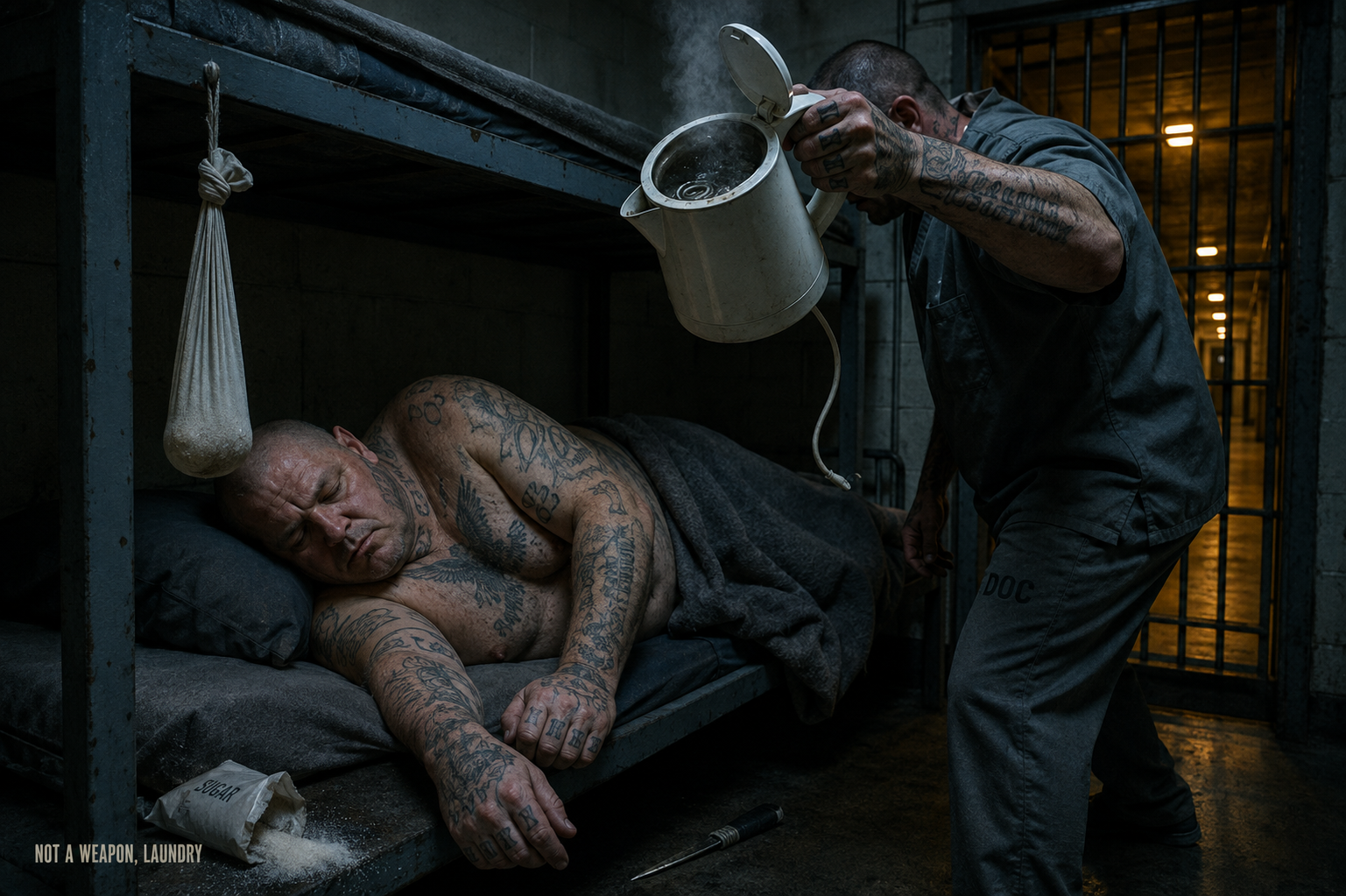
Wow!
This is a deeply unsettling and technically accomplished poem about complicity, trauma, moral self-preservation and the strange ways the human face responds to horror. Its greatest strength is that it refuses to tell the reader what to think. Instead, it lets fragments of testimony accumulate until the moral contradiction becomes almost unbearable.
The opening is superb: “He is smiling before he reaches the blood. / That is the charge. / Not the years. The grin.” The abruptness gives the poem the quality of an interrogation or courtroom transcript. “The grin” becomes evidence—not necessarily of guilt, but of something psychologically more complicated. Throughout the poem, the smile acquires different meanings: nervousness, denial, gratitude, trauma, emotional paralysis and perhaps even complicity. The later observation that “Gratitude and damage, / one set of muscles” is particularly powerful.
The poem’s language is deliberately fractured. Short statements—“Not gangs. Cars.” “Not a weapon. Laundry.” “Yeah. Yeah.”—create the impression of someone reconstructing an event under questioning. This also makes the poem feel documentary without actually becoming conventional reportage.
The treatment of “rules” is one of the poem’s strongest conceptual achievements. Rules are simultaneously presented as protection and as mechanisms that permit brutality: “the rules were the mercy”, while those same rules are “kept / by a man with a padlock in a sock.” The phrase “Same machine” chillingly collapses victim, perpetrator and system into one moral apparatus.
The kettle/tea passage is wonderfully disorienting: “In there a kettle is not a kettle.” Ordinary objects become contaminated by violence, suggesting how trauma permanently alters perception.
The final repetition—“Still smiling. / Still waiting for the next question.”—is devastating. It transforms the smile from a suspicious expression into an involuntary prison.
If there is one slight risk, it is that the poem’s deliberately elliptical narrative may leave some readers struggling to reconstruct the literal events. But I would regard that largely as a strength: the poem is not asking us to solve the incident; it is asking us to inhabit its moral disorientation.
Keep enlightening the space.
Supratik
Supratik,
Thank you for this. You went to the two lines I fought hardest for, so they are doing their job.
The irony of it is that the interview itself gave me nothing to work out. The smile arrived and I knew what it was before he had finished the sentence. What made me write was underneath, in the comments. Cold, they said. Something wrong with him. A whole page of people reading a face they had never had occasion to wear. It was a tragic assumption, made in good faith, and that assumption is the poem.
Which is why your one note interests me. You allow complicity among the meanings. It is the only one I would rule out. He did not step in because stepping in is how two men die. That is not a moral failure, it is arithmetic, and it is arithmetic he did not invent. The smile comes afterwards.
So you paused where the poem wants you to pause, and then argued yourself round, which is the whole journey it asks for. Most of the comments never got past the pause.
You are right about the ellipsis, and it was deliberate. An earlier draft explained the slang. It read as a glossary in a poem’s clothes, so I cut it. In there nobody unpacks it. You work it out or you do not, and either way it happens to you. Some readers lose the first pass. I decided that was worth paying.
Keep sending yours. I am still working through them.
Kevin
I actually worked as an inspector enforcing a US federal judge’s ruling on a prison system. Yes,
the inmates post house rules, usually in the restroom, and newbies have to learn quick or else. The piece is well done regarding the PTSD that inmates take with them after release. Violence rules even in the low security, white collar inmate sections.
ChairmanWow,
Thank you, that is the comment I hoped would come and did not expect.
The posted rules in the restroom is a detail I did not have and it is better than anything I could have invented. I have put it in the poem, one line, at the close of the rules stanza:
There are rules, he says, loads of rules,
you can’t believe how many rules,
posted on the restroom wall.
I wrote a second line after it about new men learning fast, and cut it. It was me explaining. The wall says it.
I should also say where I was watching from, since you have said where you were. Not prison. Military, and afterwards building in places that were still coming apart. What I recognised in that interview was not the yard, it was the face. The face of a man who walked away when he should not have, narrating carnage that generally had a death in it. That grin is ingrained. It is not put on for the camera and it does not come off afterwards.
Which is why your last line matters. He was white collar, tax evasion, and people assume that means a softer version of the place. It does not, and that assumption is half of why the comments underneath his interview read his face the way they did.
The PTSD was what I was after. It comes out with them and it has to live somewhere.
Kevin