
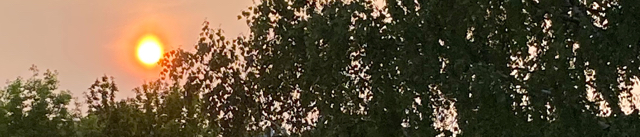
If we now remember, .
that special experience of romantic failure,
one that we secretly, frequently, erotically recall,
how many of us will have conceded to loss?
Will anyone, not be regarding it with regret?
Some say:
Not us! For we’ve moved on. To then meekly
ask instead, could there be another outcome,
enabling, perchance, the missed to return, to
really change things? Verily, I suggest, now, in
foolish haste: .
What profits anyone, who, unlike what’s normal,
refuses to challenge fate or destiny, who wouldn’t
turn passive methinks into many active me wouldst?
Most, I predict, would take the risk, by saying:
Sod the gods, I’m in!
Goth:2025
A romantic engagement indeed, Trevor! Your poem A Fate Better Than Actuality is striking in the way it captures the tension between memory, regret, and defiance. The fragmented punctuation and spacing immediately suggest hesitation, inner dialogue, and the fractured quality of recalling past loves. It begins with a collective, almost confessional tone—“if we now remember”—inviting readers to share in the intimacy of recalling failure in romance, a memory tinged with both pain and secret desire. This universality makes the theme accessible.
The rhetorical questions in the first stanza emphasize self-examination: is regret inevitable, or can memory be reshaped? The second section complicates this by suggesting that even if people claim to have “moved on,” a yearning for alternate outcomes persists. The voice here oscillates between irony (“foolish haste”) and sincerity, reflecting the contradictions of longing.
The closing shift is bold: the speaker rejects passive acceptance of fate and destiny, choosing instead an almost rebellious agency—“Sod the gods, I’m in!” This defiance transforms the poem from nostalgia to empowerment, ending with a note of reckless vitality.
Overall, the poem succeeds in blending philosophical reflection with raw emotional honesty. Its structure mirrors the mind’s wandering through memory, while its conclusion asserts the courage to resist resignation.
I seem to be stuck in this ‘next time round’ mode, don’t I! Meant to follow up the previous ‘A Fate Better Than Chance’, but, presented a little tongue-in-cheek too! I’m grateful again for your in-depth analysis, makes all effort to publish something with so few contributing and responding to other people’s work, so worthwhile. Your skill at seeing things as component parts forming an intended whole, useful reflections passed on to the author should encourage new membership, for who wouldn’t like such qualified feedback? The Forum reveals many new members joining, but few seem to go further and submit work. Do you think the site’s too difficult to use? Well, the therapeutic process of composing and writing down thoughts has served both you and me well, anyway, good to have you around, old friend while the opportunity exists!
You’re absolutely right — the “next time round” mode seems to be part of all of us who keep writing, rewriting, and circling back to thoughts and creations. It’s a process that carries its own meaning, whether tongue-in-cheek or earnest.
I should also say how grateful I am to UKAuthors for opening up a whole new world for me, where ideas are shared with such honesty and freedom. I’m in awe of the site and its community, so much so that I can’t even begin to judge whether it’s “easy” or “difficult” to navigate — for me, the joy of connecting here outweighs all else.
What thrills me most is receiving feedback from British writers on what I write in their own language. That experience has been invaluable, not only because of the insights shared, but also because it has given me the conviction that yes, I too can write in English. The arguments, the debates, the encouragements — bitter and sweet alike — have all deepened my bond with the site and with the craft of writing itself.
I truly wish more writers like me could experience this space, where responses are genuine and honest, and where every effort put into writing feels seen, even if they are few in number! But then you guys are known to be stiff upper lip, or self-restraint! That’s what Hofstede tells his readers! Your companionship and encouragement have made the journey even more rewarding, old friend. Gratitude.